
3D exterior rendering for home builders is a photorealistic pre-construction visualization process that converts approved architectural drawings, elevation sets, and material specification schedules into high-fidelity, buyer-facing CGI imagery – enabling volume builders, custom home builders, and residential developers to execute off-plan contracts, launch pre-sales campaigns, and generate construction financing evidence before site works commence. By integrating physically based rendering pipelines, parametric material libraries, and geospatially accurate lighting simulation into the pre-construction marketing workflow, builders eliminate the revenue lag historically caused by waiting for structural completion before presenting product to market. The outcome is a fully operational sales and marketing asset suite – including MLS-ready still imagery, display suite content, brochure print files, and digital advertising creative – produced entirely from construction documents.
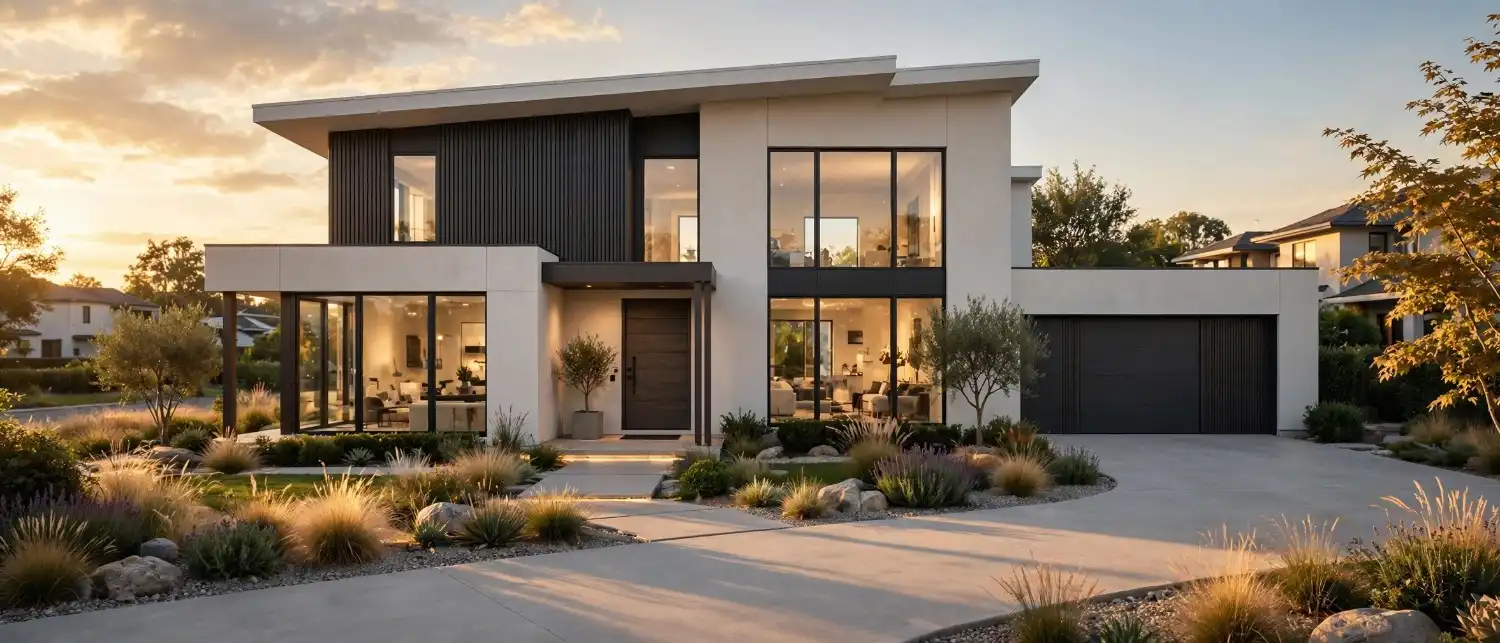
New construction sales have always carried a fundamental tension: buyers want to see what they are purchasing, but builders cannot show a finished home that does not yet exist. For generations, that tension produced compromises – rough sketches, generic floor plan booklets, and speculative show homes that cost as much to build as the product they were meant to sell.
That constraint has been permanently resolved.
Why 3D Exterior Rendering for Home Builders Is Now a Core Business Tool
The residential construction industry operates on pre-sales. Volume builders, project home companies, and custom residential developers all depend on off-plan contract execution to secure construction financing, manage cash flow, and de-risk development programs before a single concrete pour occurs.
Historically, achieving those pre-sales required either:
- A fully constructed and staged display home (high capital cost, long lead time)
- Generic marketing collateral based on plans and rough artist impressions (low buyer confidence)
- Waiting until partial construction provided something photographable (lost pre-sales window)
3D exterior rendering for home builders eliminates all three constraints simultaneously. It produces photorealistic, marketing-grade imagery from approved drawings at a fraction of the cost of a display home – and in days rather than months.
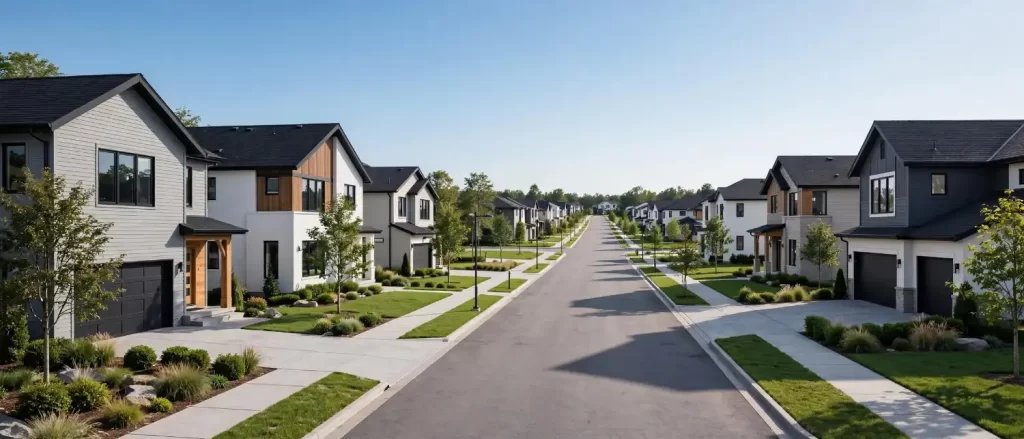
According to the National Association of Home Builders (NAHB), buyer decisions in new construction purchases are heavily influenced by visualizations of the finished product. Builders who provide photorealistic pre-construction imagery consistently achieve higher pre-sales volumes, faster contract execution, and stronger lender confidence in project viability.
Understanding the technical foundation of this process matters for every builder who commissions it. The detailed resource on how exterior house visualization is technically produced covers the methodology, software, and deliverable types in full.
What 3D Exterior Rendering Delivers for Residential Builders
A professional rendering brief for a residential building project produces a complete suite of marketing and sales assets. Specifically, builders receive:
- Hero exterior still renders: Photorealistic images from 3 to 6 defined camera angles, formatted for MLS listings, project websites, and print brochures
- Facade variant catalogue: Multiple color scheme and material option renders showing the same floor plan in different exterior treatments – essential for display suite product selection tools
- Dusk and twilight renders: Evening exterior renders showing warm interior lighting and atmospheric sky conditions – the highest-converting creative asset in residential property advertising
- Aerial or elevated perspective views: Bird’s-eye renders showing the home within its site context, particularly valuable for corner allotments and homes with significant roof form or landscaping
- Animated exterior walkarounds: Rendered video sequences showing the home from multiple angles in a single continuous motion pass – used on project websites and in digital advertising campaigns
- 360-degree interactive panoramas: Self-directed buyer exploration tools for display suite touchscreen kiosks and project landing pages
Each of these deliverable types serves a specific function in the builder’s pre-sales and marketing ecosystem. Together, they replace the entire visual content function of a physical display home – at a fraction of the capital commitment and with full revision flexibility.
Builders who want to understand the full commercial scope of what these deliverables can achieve across a project’s sales lifecycle should explore the professional 3D exterior rendering and visualization services available for residential construction programs of all scales.
How Home Builders Use 3D Exterior Rendering Across the Development Lifecycle
Phase 1 – Land Acquisition and Project Feasibility
3D exterior rendering for home builders enters the development workflow earlier than most builders realize – and earlier than most competitors deploy it.
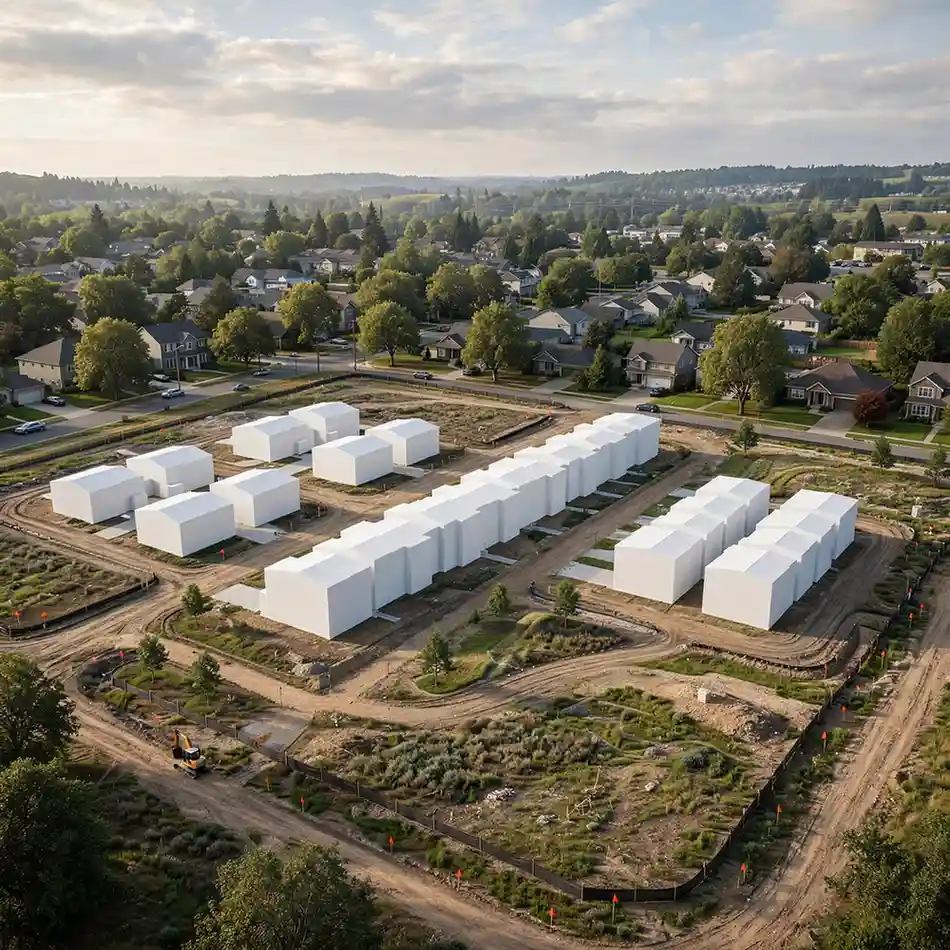
During the land acquisition and feasibility phase, preliminary exterior renders of proposed dwelling types help builders:
- Evaluate the visual character of proposed product against the site’s existing neighborhood context
- Present development proposals to joint venture partners, equity investors, and construction lenders
- Support development application submissions to local planning authorities
- Generate early-stage interest from buyer registration campaigns before any formal approvals
Even simplified massing-level renders at this stage deliver commercial value by making the development concept tangible and communicable to all project stakeholders.
Phase 2 – Pre-Sales Campaign Launch
This is the phase where 3D exterior rendering for home builders delivers its most significant and most measurable commercial return.
The pre-sales campaign launches before construction begins. Builders use photorealistic exterior rendering as the visual foundation for:
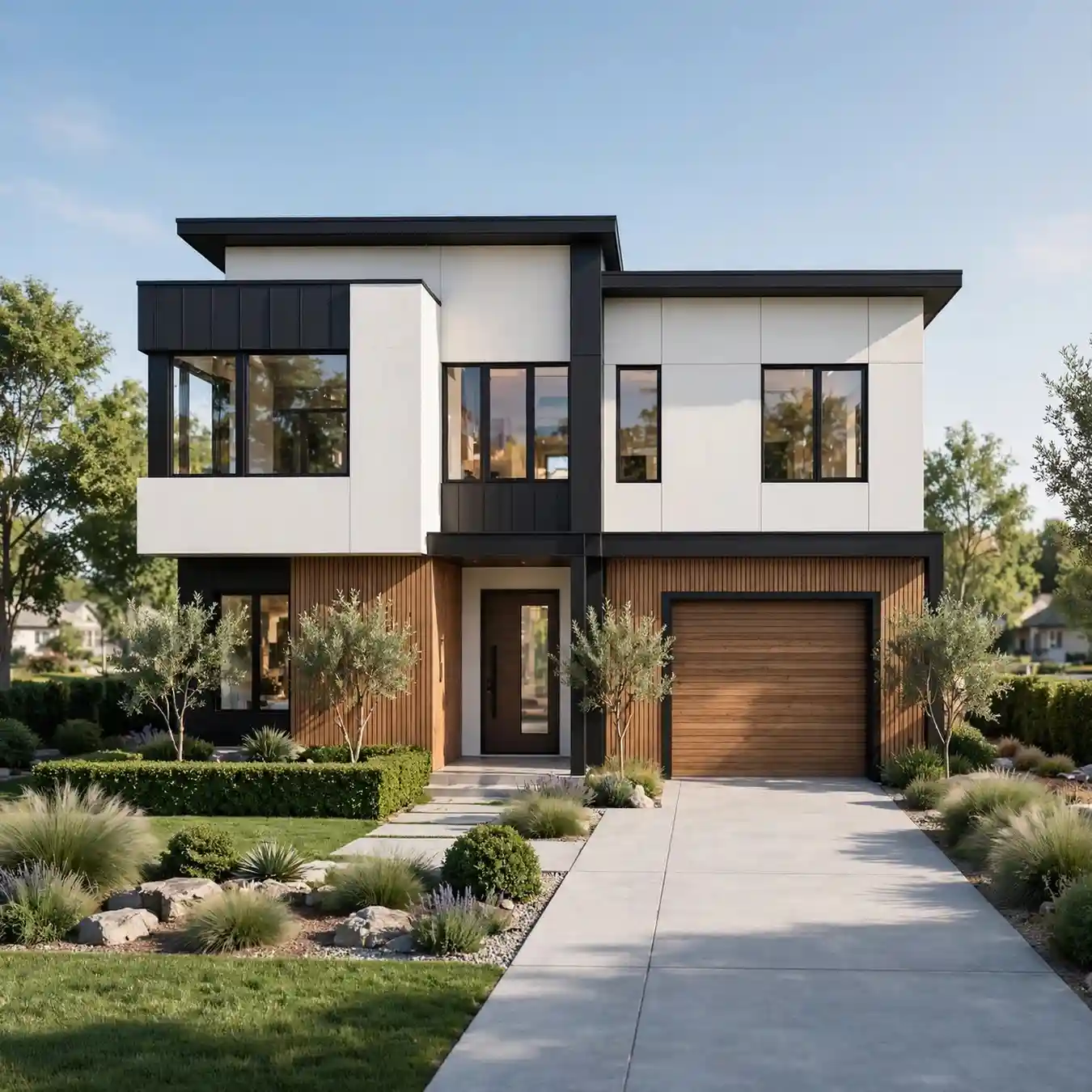
Project website and landing page: The project hero image, gallery, and all digital touchpoints are built from rendering outputs. A well-rendered project site communicates design quality and construction credibility to prospective buyers the moment they land on the page.
MLS and portal listings: Photorealistic renders allow builders to list individual lots or home-and-land packages on major property portals from day one of the campaign – not from when frames are up.
Digital advertising creative: Facebook and Instagram carousel ads, Google Display banner ads, YouTube pre-roll thumbnails, and programmatic display creatives are all produced from rendering outputs. The visual quality of the render directly determines the ad’s click-through rate and cost per lead.
Buyer registration database campaigns: Email marketing to buyer registration lists converts at significantly higher rates when the email hero image is a photorealistic exterior render rather than a plan or a vacant block photograph.
Off-plan sales contracts: Buyers who can see a photorealistic representation of the finished home are substantially more willing to execute off-plan contracts. Rendering reduces the buyer’s perceived risk – which directly accelerates the contract cycle.
Phase 3 – Display Suite and Showroom Presentation
Many volume builders and project home companies invest in display suites rather than fully constructed display homes for individual project releases. 3D exterior rendering is the primary visual content layer in a modern display suite environment:
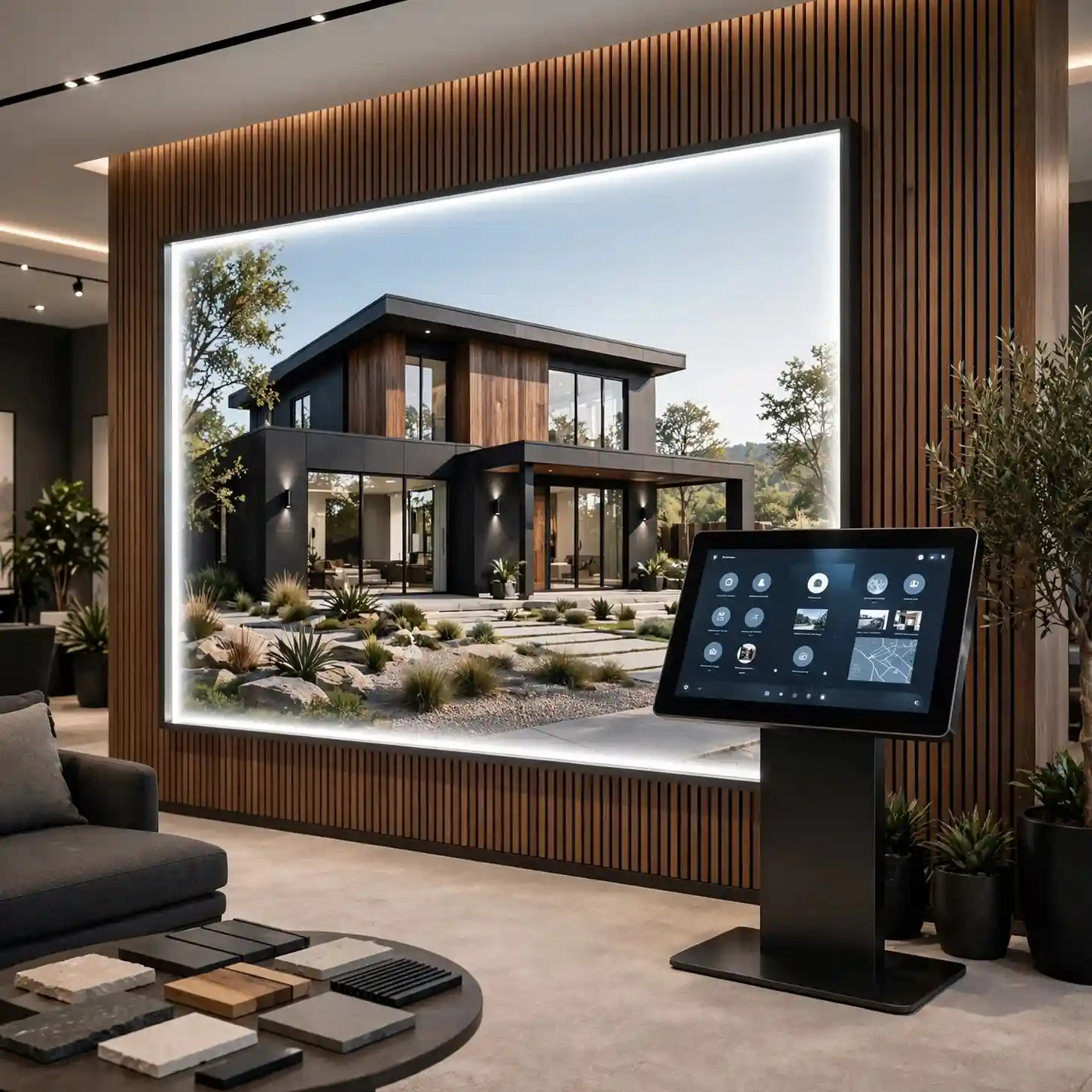
- Large-format backlit lightbox prints: Floor-to-ceiling photorealistic renders of facade options displayed in the display suite create an immersive product selection experience without requiring physical construction
- Touchscreen interactive facade selector: Buyers use a touchscreen kiosk to select from multiple facade variants – each represented by a photorealistic rendering – alongside roof color, cladding material, and window frame options
- Animated rendering loops on display screens: Rendered walkaround animations playing on display suite monitors show the home in motion from multiple angles, creating a cinematic product presentation experience
- Printed display suite brochure: The full rendering package forms the visual backbone of the project brochure distributed to prospective buyers during display suite visits
Phase 4 – Construction Progress and Buyer Communication
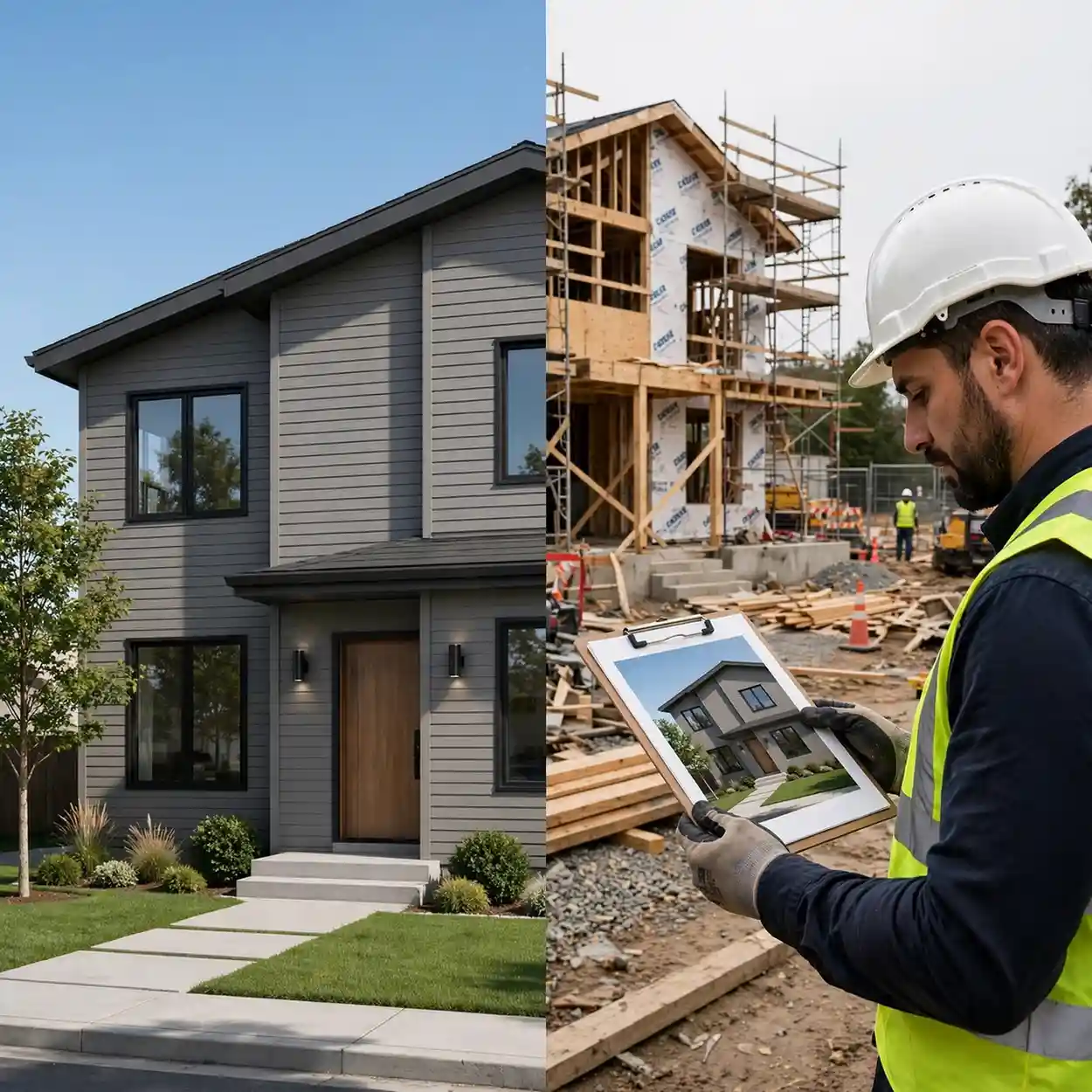
Once contracts are executed and construction commences, the approved exterior rendering transitions from a sales tool into a buyer communication reference. Builders use it to:
- Set accurate buyer expectations for the finished exterior appearance
- Provide a visual benchmark for progress update communications
- Reference during color selection and specification appointments to confirm buyer choices against the approved visual
- Generate post-completion photography briefs for the project photographer
Phase 5 – Post-Completion Portfolio and Future Marketing

The rendering assets produced for a project’s pre-sales campaign retain long-term value beyond the individual development:
- Builder portfolio and award submissions: Pre-construction renders alongside post-completion photographs form compelling project case studies for builder portfolio websites and industry award entries
- Future project marketing: Renders of completed and delivered projects demonstrate track record to buyers of new releases – building trust with future purchasers who research the builder before committing
The Commercial Impact: Pre-Construction Sales Performance With and Without 3D Rendering
| Sales Metric | Without 3D Rendering | With 3D Exterior Rendering |
|---|---|---|
| Pre-sales campaign launch timing | Delayed until partial construction | Immediate on DA approval |
| Off-plan contract execution rate | Low – buyers lack visual confidence | Significantly higher |
| Cost of primary marketing visual asset | High – display home required | Fraction of display home cost |
| Construction financing evidence quality | Weak – no product visual | Strong – photorealistic renders submitted with DA |
| Buyer deposit conversion from enquiry | Lower without visual reference | Higher with photorealistic imagery |
| Campaign duration before first contract | Extended | Compressed |
| Marketing asset revision flexibility | Zero post-construction | Fast digital revision pre-launch |
Comparing Pre-Construction Marketing Approaches for Home Builders
| Approach | Visual Realism | Cost | Speed to Market | Revision Flexibility | Pre-Sales Effectiveness |
|---|---|---|---|---|---|
| Display home (full construction) | Very high | Very high | 6–12 months | None | Very high – but after significant capital spend |
| Artist impression / sketch | Low | Low | Fast | Slow | Low |
| Basic floor plan brochure | None | Low | Fast | Moderate | Very low |
| Basic CAD render | Low-medium | Low-medium | Moderate | Limited | Low-moderate |
| Photorealistic 3D exterior rendering | Very high | Medium | 3–7 business days | Fast digital | High – from day one of campaign |
| Animated 3D exterior walkthrough | Very high | Medium-high | 1–2 weeks | Moderate | Very high for digital campaigns |
Common Mistakes Home Builders Make With Pre-Construction Rendering
Commissioning Renders Too Late in the Development Timeline
The single most common and most commercially costly mistake builders make is treating rendering as a final-stage deliverable – something produced after DA approval has been received and the sales team is already waiting. In reality, preliminary renders can and should be produced as early as the feasibility and land acquisition stage to support investor presentations, lender submissions, and early buyer registration campaigns.
Using the Same Render for All Facade Variants
Volume builders typically offer multiple facade options for each floor plan. Producing a photorealistic render of only one facade variant and expecting buyers to imaginatively substitute other options leaves sales conversions on the table. Every facade option that a builder presents to the market deserves its own rendering – because buyers make decisions based on what they can see, not what they can imagine.
Neglecting Site-Specific Context
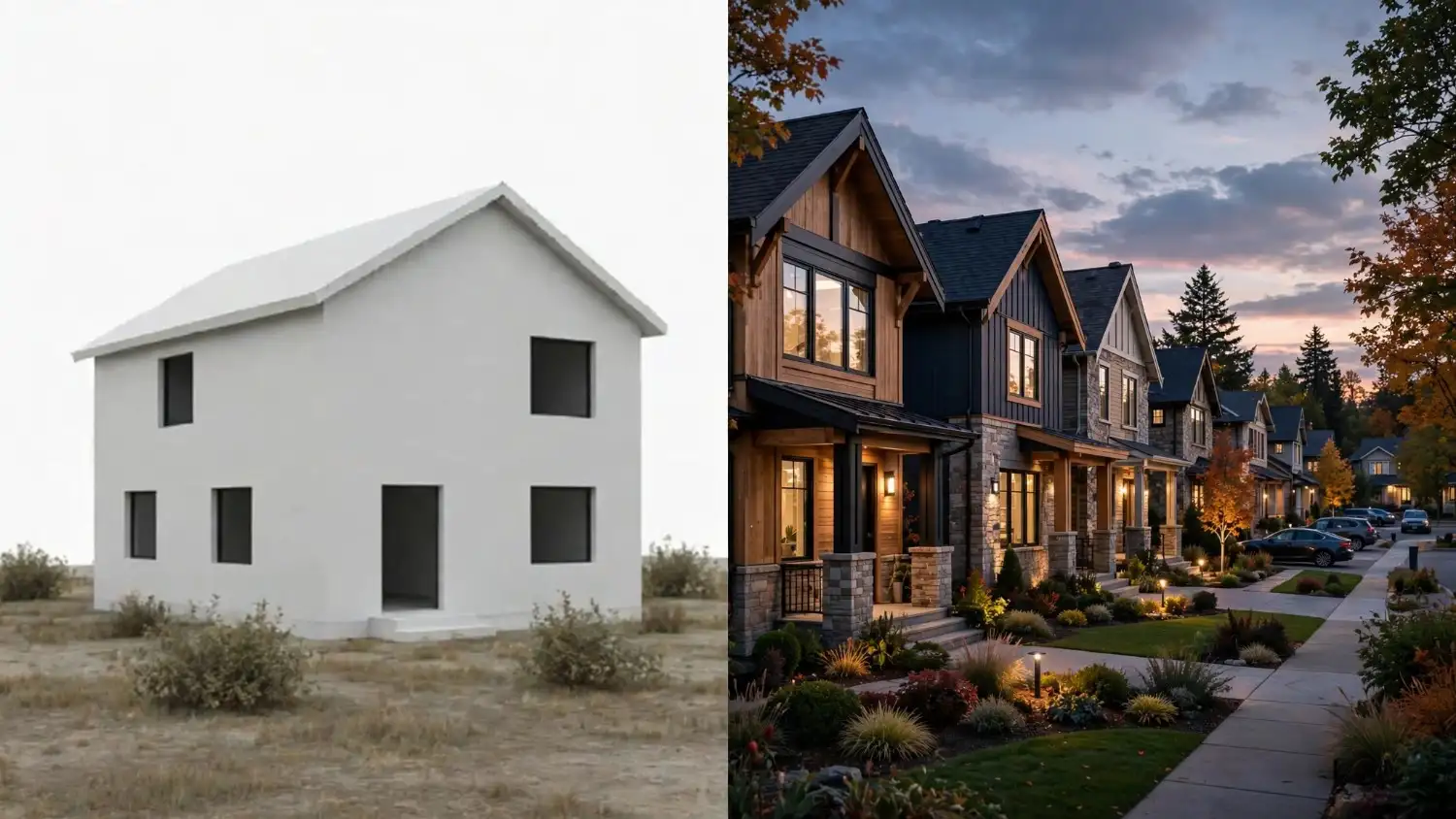
A rendering that shows the home floating against a white background or a generic blue sky does not communicate the home’s relationship to its actual lot, streetscape, or neighborhood. Site-accurate rendering – placing the home on the correct lot with real neighboring context, street furniture, and landscape conditions – builds buyer trust and produces a dramatically more credible pre-sales image.
Requesting Only Daytime Renders
As established in broader real estate marketing research, twilight and dusk renders consistently outperform daytime renders in click-through rate metrics across digital advertising platforms. Builders who request only midday renders miss the highest-converting creative format available to them. Every rendering brief should include at least one dusk or twilight exterior as a standard deliverable.
Not Briefing for Print-Resolution Output From the Start
Rendering files must be delivered at 300 DPI minimum for all print applications including brochures, display suite lightboxes, site hoardings, and large-format signage. Builders who brief for digital output only and then attempt to scale renders up for print production encounter resolution quality failures that require return visits to the studio – adding cost and delay. Specify all output formats in the initial brief.
Failing to Update Renders When Design Changes Are Made
During the development approval process, designs frequently undergo modifications in response to planning conditions, structural engineering requirements, or buyer feedback from early sales conversations. When the approved design changes materially from the rendered version – new window placement, altered roofline, different cladding material – the render must be updated before it continues to be used in marketing. Using an outdated render that no longer matches the approved design creates buyer expectation failures and potential legal exposure.
Expert Tips for Home Builders: Maximizing Commercial Return From 3D Exterior Rendering
Tip 1 – Build the Rendering Brief Into the Project Program From Day One
Include rendering production timelines in the master project program alongside DA preparation, engineering, and contract documentation milestones. Treating rendering as a parallel workflow – not a sequential one – ensures marketing assets are ready when pre-sales launches, not weeks after.
Tip 2 – Produce a Complete Facade Variant Catalogue for Volume Products
For project home ranges with multiple facade options per floor plan, commission a full rendered catalogue of every facade variant across every color scheme. This asset suite powers the display suite touchscreen selector, the project website gallery, the brochure insert pages, and the digital ad creative library – all from a single studio production run.
Tip 3 – Use Rendering to Support Construction Financing Applications
Photorealistic exterior renders of the proposed development – particularly aerial renders showing full site coverage and street interface – strengthen construction financing applications by demonstrating the project’s visual quality and market positioning to lenders. Many construction financiers specifically reference visualization quality as a factor in development approval assessments.
Tip 4 – Request Seasonal and Weather Variations for Long Campaign Periods
For projects with extended pre-sales windows of six months or more, request a summer-green landscape version and an autumn or spring variation of the primary render. Refreshing the marketing image seasonally maintains campaign visual freshness without incurring the cost of a complete re-render.
Tip 5 – Leverage Renders for Subcontractor and Supplier Briefing
Beyond the sales function, approved exterior renders serve a practical construction coordination purpose. Distributing the final render to cladding suppliers, window manufacturers, roofing contractors, and landscaping teams provides a shared visual reference that reduces on-site material substitution errors and ensures that every trades team is working toward the same finished appearance.
Data compiled by the Urban Land Institute (ULI) consistently identifies pre-construction visualization quality as a significant factor in residential development pre-sales performance, buyer confidence metrics, and construction financing acceptance rates across both volume and custom residential development categories.
How 3D Exterior Rendering Reduces Spec Risk for Home Builders
Speculative construction – building homes without confirmed buyers – is one of the highest-risk positions in residential development. 3D exterior rendering directly reduces spec risk by:
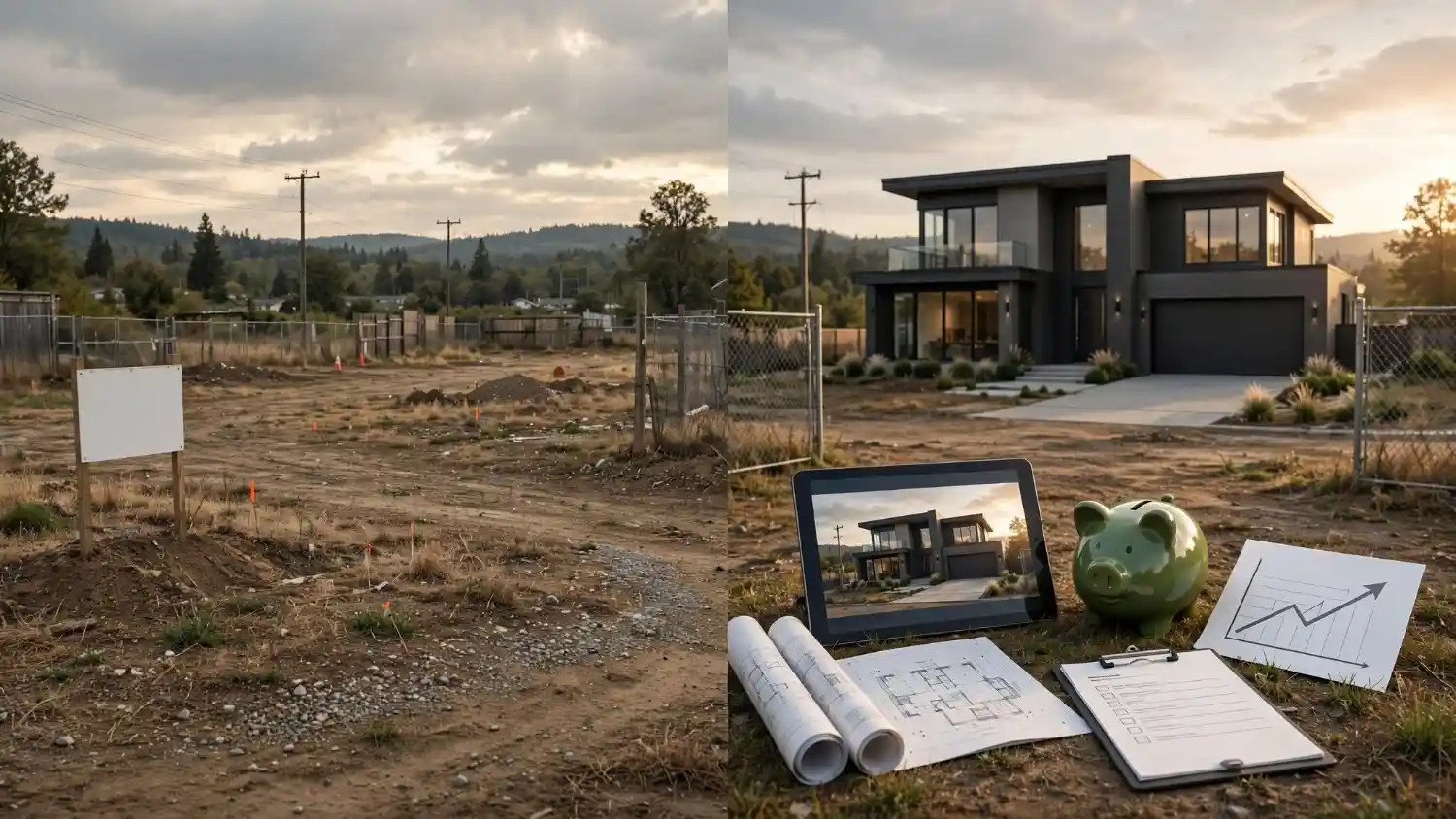
Enabling pre-sales before construction commitment: A rendering-supported pre-sales campaign can generate contracted buyers before any construction expenditure is made, converting a speculative build into a pre-sold project.
Reducing the need for physical display homes: A full display home for a project home range can cost the same as several production homes to construct and stage. Rendering-supported display suites replicate the product presentation function at a fraction of that capital cost.
Generating lender-quality project evidence: Construction lenders increasingly expect photorealistic visualization of proposed developments as part of the financing application. Quality renders signal professional project management, marketing preparedness, and market positioning – all of which support favorable financing terms.
Supporting price positioning: Photorealistic renders communicate design quality to buyers at a level that justifies premium pricing. Buyers who see a beautifully rendered home enter price negotiations with a higher perceived value benchmark than buyers presented with plans or rough sketches.
Reducing post-contract buyer attrition: Off-plan buyers who experience buyer’s remorse during the construction period are more likely to proceed confidently if they have a clear, photorealistic visual reference for the home they contracted. Reducing attrition protects the builder’s revenue program and avoids the cost and delay of re-selling mid-construction.
Frequently Asked Questions (FAQ)
What is 3D exterior rendering for home builders and how does it work?
3D exterior rendering for home builders is the process of creating photorealistic computer-generated images of a proposed residential home’s exterior – based entirely on architectural drawings, elevation sets, and material specifications – before any physical construction begins. A rendering studio builds a three-dimensional digital model of the home, applies accurate material textures and lighting conditions, and produces high-resolution images and video outputs that serve as the primary marketing and sales assets for the project’s pre-construction campaign.
How early in the development process can builders commission 3D exterior rendering?
Rendering can be commissioned as early as the feasibility and land acquisition stage using preliminary design concepts and massing studies. More detailed photorealistic marketing renders are typically commissioned once development application drawings are finalized or approved. The earlier rendering enters the development program, the longer the pre-sales window it can support – and the stronger the early buyer registration campaign it enables.
How many facade options should a home builder render for a volume product range?
Every facade option that the builder intends to present to buyers should have its own rendering. For a typical volume builder product range, this means rendering all available facade variants across the primary color scheme at minimum, with additional renders for premium or alternative color options. A complete facade variant catalogue produced from a single studio brief provides the foundational asset for the display suite selector, project website gallery, and brochure production.
Can 3D exterior rendering replace a physical display home for home builders?
Rendering-supported display suites can replicate many of the sales functions of a physical display home – particularly product selection, visual presentation, and buyer confidence building – at a significantly lower capital cost and without the 6-12 month construction lead time. For initial project releases or geographically dispersed project home ranges, rendering-supported display environments often represent the most commercially efficient way to present product to market.
How does 3D exterior rendering support construction financing applications?
Construction lenders increasingly require photorealistic visualization of proposed developments as part of the financing submission. High-quality exterior renders communicate the project’s design quality, market positioning, and pre-sales marketing preparedness to lenders – all factors that influence both approval outcomes and financing terms. Aerial renders showing full site coverage and street interface are particularly valuable in development financing contexts.
What resolution and format specifications should builders request for rendering outputs?
Builders should specify all intended output formats in the initial brief: screen resolution files (minimum 1,920 x 1,080 pixels) for MLS listings, websites, and digital advertising; print resolution files (300 DPI minimum at intended print dimensions) for brochures, display suite lightboxes, and site hoardings; video resolution exports (1,920 x 1,080 or 3,840 x 2,160 for 4K) for animated walkarounds and display suite screen loops. Addressing all format requirements at briefing stage eliminates costly revision requests after delivery.
How does 3D exterior rendering reduce buyer attrition on off-plan contracts?
Off-plan buyers – those who contract before construction completes – are vulnerable to buyer’s remorse during the construction period because they have no physical reference for the home they are purchasing. A photorealistic exterior rendering gives contracted buyers a clear, detailed, and aspirational visual benchmark that sustains their confidence and emotional investment throughout the construction timeline. Builders who provide high-quality rendering references to contracted buyers consistently report lower attrition rates and fewer contract termination requests during construction.
Sell the Home Before the Slab Is Poured
The competitive advantage in residential construction no longer belongs to the builder with the most display homes. It belongs to the builder who can move fastest – from land acquisition to pre-sales launch – while maintaining the visual quality that converts buyer interest into signed contracts.
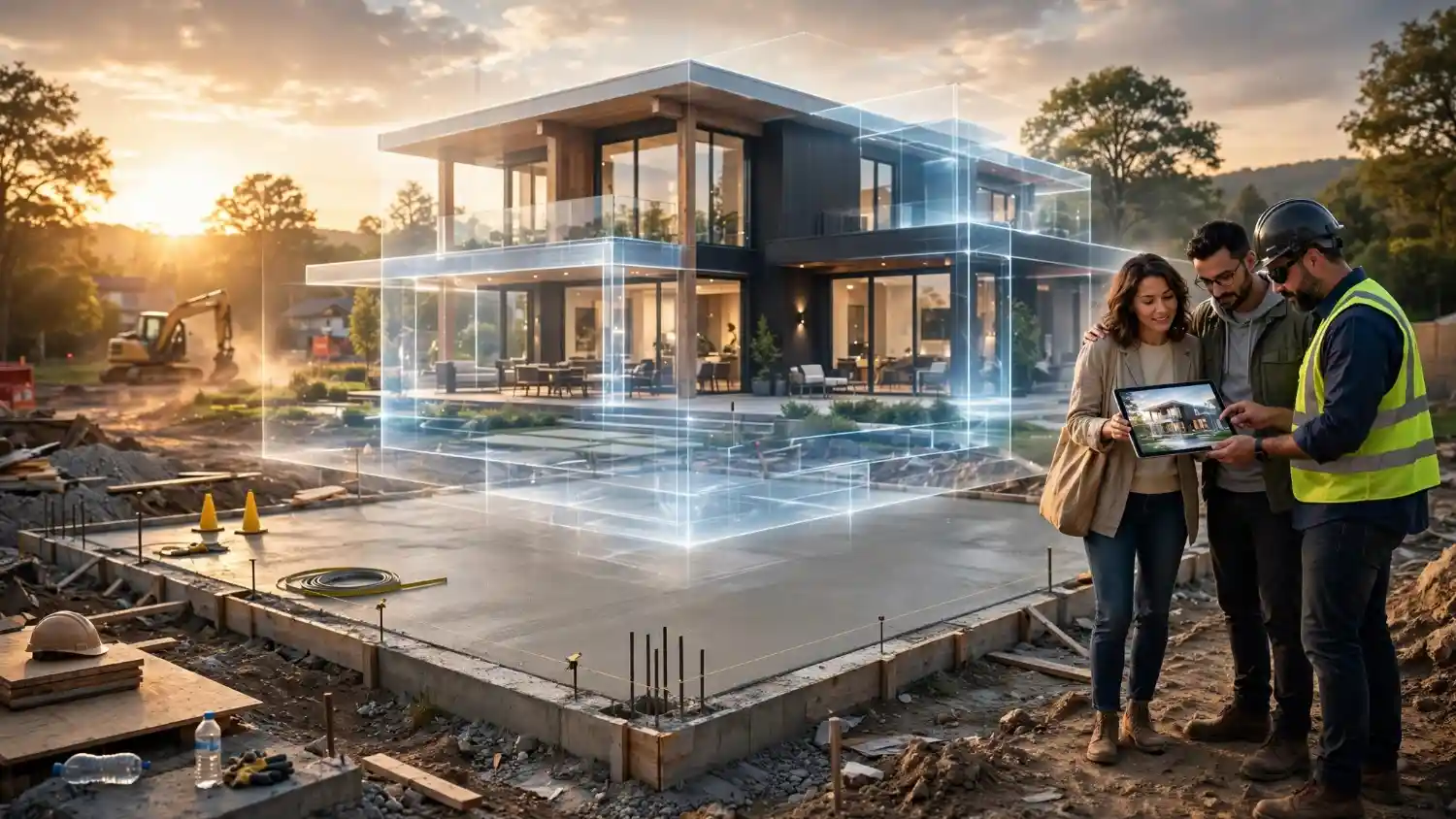
3D exterior rendering for home builders delivers exactly that capability. It compresses the pre-sales timeline from months to days, eliminates the capital cost of speculative display construction, generates lender-quality project evidence from drawings alone, and produces the buyer-facing visual assets that drive pre-construction contract execution before a single sod is turned.
The builders who integrate rendering into the earliest stages of their development program – not as an afterthought, but as a strategic pre-sales and financing instrument – consistently outperform those who treat it as a late-stage marketing decoration.
If you are ready to launch faster, sell earlier, and build with contracted buyers already in place, and put your pre-sales campaign in motion from the moment your drawings are approved.
Order Professional Photorealistic 3D Exterior House Renderings →