
Knowing how to choose a 3D exterior house rendering company correctly requires evaluating a studio’s technical pipeline – specifically its capacity for physically based rendering (PBR), BIM-to-render workflow compatibility, sun-accurate lighting simulation, and photorealistic material library depth – alongside its architectural project experience, revision policy structure, and output format specifications before committing to any engagement. The difference between a generalist CGI studio and a specialist architectural exterior house rendering practice is measurable in output accuracy, material fidelity, dimensional correctness, and the commercial usability of delivered assets for MLS listings, planning submissions, and construction documentation. Asking the right qualifying questions at the briefing stage protects your investment, aligns studio capability with project requirements, and eliminates the most common source of dissatisfaction: receiving technically sound imagery that fails to serve its intended commercial or design communication purpose.
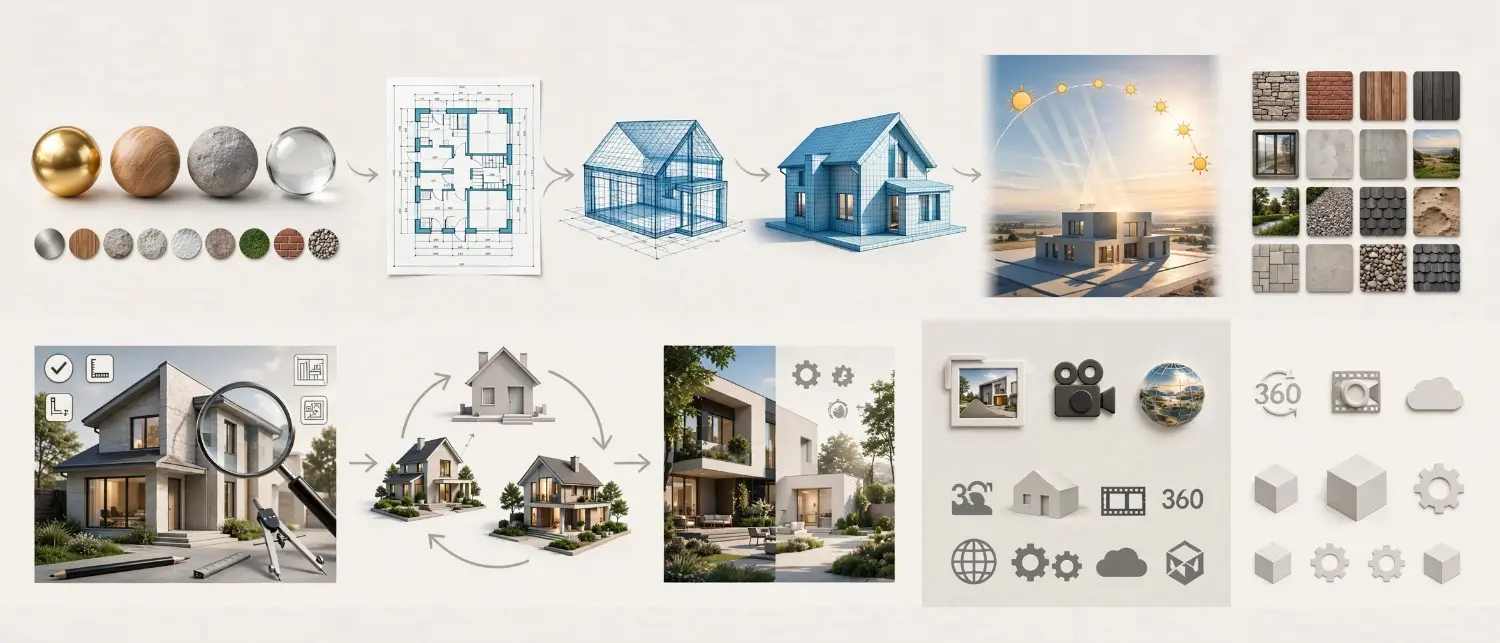
Choosing the wrong house rendering studio is an expensive mistake – not just in wasted fees, but in lost time, missed sales windows, and the downstream cost of re-briefing an entirely new provider from scratch. Every homeowner, architect, real estate agent, and home builder who has received a disappointing house rendering has one thing in common: they did not ask enough of the right questions before signing off on the brief.
Why Knowing How to Choose a 3D Exterior House Rendering Company Matters More Than Price
The house rendering market spans an enormous range: from offshore generalist studios charging a few hundred dollars per image to specialist architectural visualization practices delivering construction-accurate, photorealistic outputs at professional-grade resolution. The price difference does not always predict quality – and the quality difference is not always visible in a studio’s portfolio until after your project is delivered.
More critically, house rendering quality is not a single variable. A studio can produce stunning generic architectural scenes while failing completely on the specific requirements of your project: accurate material representation, correct proportional geometry, appropriate camera angle selection, or print-resolution output formats.
The 10 qualifying questions in this article cover the technical, commercial, and workflow dimensions of house rendering studio selection that most clients never think to ask – until they have learned the lesson the expensive way.
Before commissioning any studio, understanding what the house rendering process actually involves at a technical level is foundational. The detailed explainer on what 3D exterior house rendering is and how it works provides the technical baseline every client needs before evaluating a studio’s capability claims.
This is also the decision point where commissioning a specialist residential 3D exterior rendering practice – rather than a generalist CGI provider – delivers the most significant and most measurable quality differential.
How to Choose a 3D Exterior House Rendering Company: The 10 Essential Questions
Question 1 – Can You Show Me Residential Exterior House Rendering Projects Specifically?
Why this question matters:
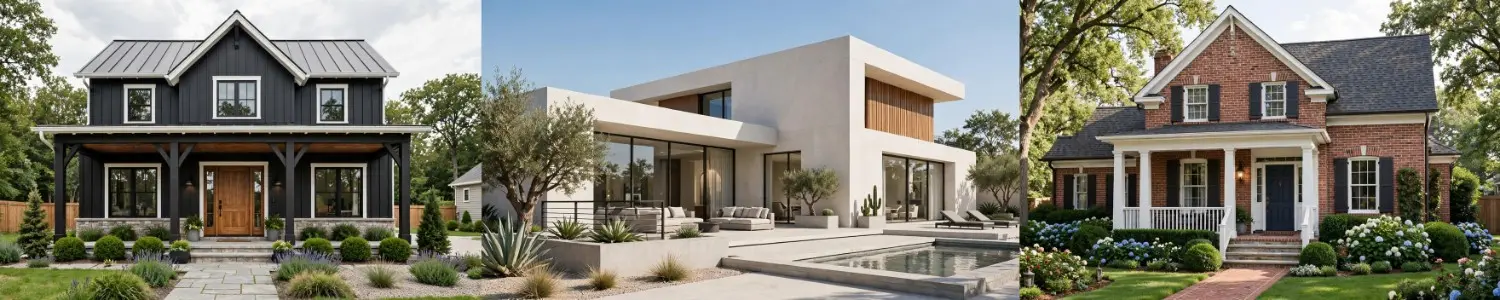
Portfolio breadth is not the same as portfolio relevance. A studio with an impressive collection of interior renders, product visualizations, or commercial building facades may have limited experience with residential exterior visualization – which has its own specific requirements: residential-scale material textures, domestic landscape staging, curb-appeal camera angle selection, and the particular lighting conditions that make a family home look aspirational rather than institutional.
What to look for in the answer:
- A portfolio section dedicated specifically to residential exterior projects
- Evidence of variety: different architectural styles, different material palettes, different site contexts
- Images produced from architectural drawings – not just from reference photographs of existing homes
- Consistency of quality across multiple projects, not just a handful of hero images
Red flag: A studio that redirects you to a general CGI portfolio without demonstrating specific residential exterior house rendering experience.
Question 2 – What Source Documents Do You Need and What Happens if My Drawings Are Incomplete?
Why this question matters:
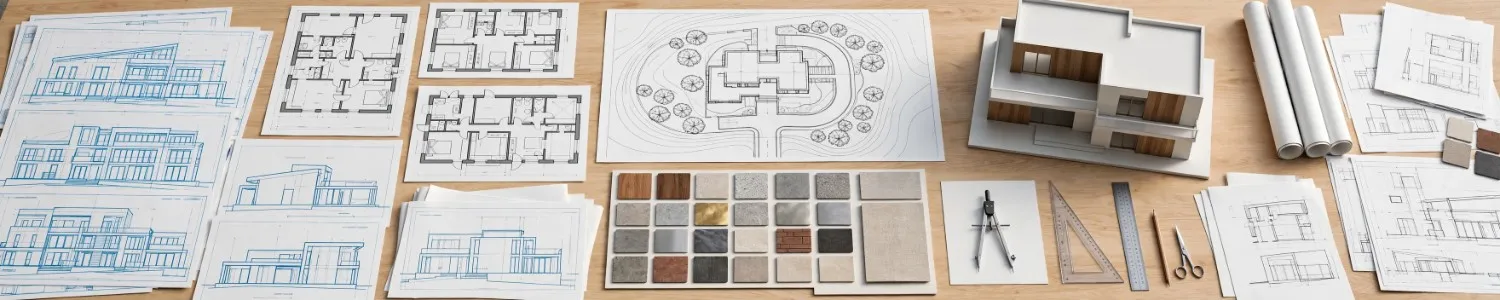
Rendering accuracy is directly proportional to the completeness of the source documents. However, not every client arrives with a full set of finalized architectural drawings. How a studio handles incomplete or preliminary source material tells you a great deal about their architectural literacy and project management professionalism.
What to look for in the answer:
- A clear list of required documents: all four building elevations, site plan, floor plans for window and door placement verification, material and finish schedules
- A transparent process for flagging gaps in source documents before production begins
- Experience working from preliminary drawings for early-stage conceptual renders versus finalized construction documents for marketing renders
- A written confirmation of which design elements the house rendering reflects so both parties share the same scope understanding
Red flag: A studio that begins production without reviewing source document completeness, or that makes undisclosed assumptions about missing design information without client confirmation.
Question 3 – How Do You Handle Revision Rounds and What Is Included in the Fee?
Why this question matters:
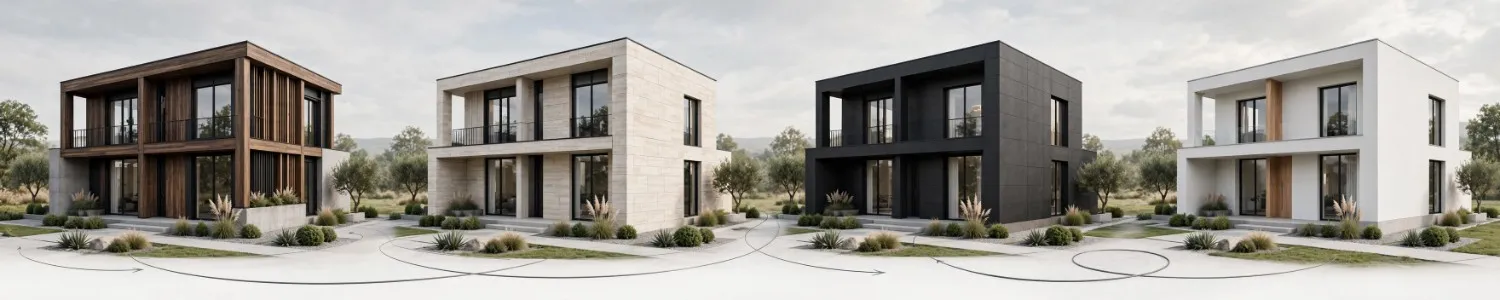
Revision policy is the most common source of commercial friction between rendering clients and studios. Many clients discover mid-project that their initial quote covered only one revision round – and that every subsequent change attracts an additional hourly charge. Understanding the revision structure before you commit is essential for budget management and timeline control.
What to look for in the answer:
- A clearly defined number of included revision rounds in the quoted fee
- A precise definition of what constitutes a revision (minor color change, camera angle adjustment) versus a major scope change (new facade material, structural design alteration)
- A transparent hourly rate or flat fee for out-of-scope revisions
- A structured review and feedback process: written feedback submissions, marked-up reference images, or a defined communication channel for revision requests
Red flag: Vague language around revisions such as “reasonable changes included” without a defined scope boundary. This is the most common source of unexpected additional charges.
Question 4 – What Rendering Software and Rendering Engine Do You Use?
Why this question matters:
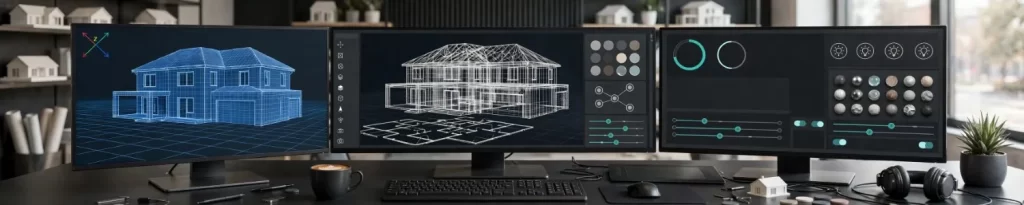
The software pipeline a studio uses directly determines the maximum quality ceiling of their output. This is not about brand loyalty – it is about understanding whether the studio’s technical infrastructure is capable of producing the level of photorealism, material accuracy, and lighting fidelity that your project requires.
What to look for in the answer:
For professional-grade residential exterior house rendering, expect to hear references to:
- Modeling platforms: Autodesk Revit, Autodesk 3ds Max, SketchUp Pro, or Rhino
- Rendering engines: V-Ray, Corona Renderer, Lumion, Enscape, or Twinmotion
- Post-processing tools: Adobe Photoshop or Lightroom for final color grading, atmosphere, and output preparation
Studios using entry-level or consumer-grade tools – or who cannot name their software pipeline confidently – are unlikely to produce the material fidelity and lighting realism that professional exterior house rendering requires.
Red flag: A studio that cannot or will not identify their house rendering engine, or that uses generic render software associated with basic CAD output rather than professional architectural visualization.
According to technical guidance published by Autodesk, the integration of BIM-accurate geometry with high-fidelity house rendering engines is the industry benchmark for professional architectural visualization – and a direct indicator of the dimensional accuracy that distinguishes professional rendering from amateur CGI.
Question 5 – How Do You Simulate Lighting and What Lighting Options Can You Provide?
Why this question matters:
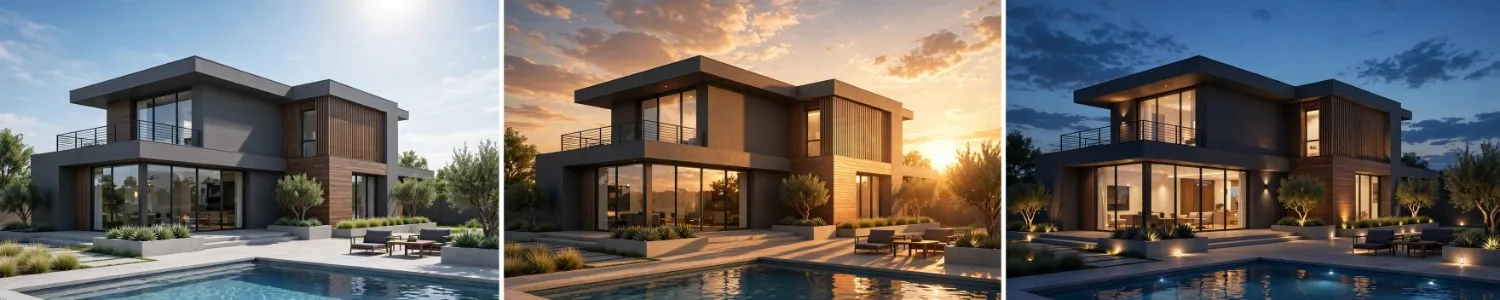
Lighting is the single most impactful variable in the visual quality and emotional impact of an exterior house rendering. Sun angle, sky model, time of day, and seasonal light direction all affect how materials appear, how shadows fall, and how the home reads emotionally. A studio with limited lighting capability will deliver technically accurate but visually flat results that fail in marketing applications.
What to look for in the answer:
- Sun position simulation: The ability to set a specific geographic location, date, and time to produce accurate shadow angles for the project’s actual site coordinates
- HDRI sky models: High dynamic range environment maps that replicate overcast, golden hour, midday, and twilight sky conditions with photographic accuracy
- Twilight and dusk rendering capability: The ability to simulate warm interior lighting and exterior artificial lighting against an evening sky
- Multiple lighting condition options: Ideally, a studio should offer at least a primary midday render and a dusk render as standard deliverable options
Red flag: A studio that produces only one generic midday lighting condition and cannot demonstrate dusk or golden-hour lighting in their portfolio. This suggests a basic rendering pipeline without HDRI sky integration.
Question 6 – How Do You Handle Landscape and Site Context?
Why this question matters:
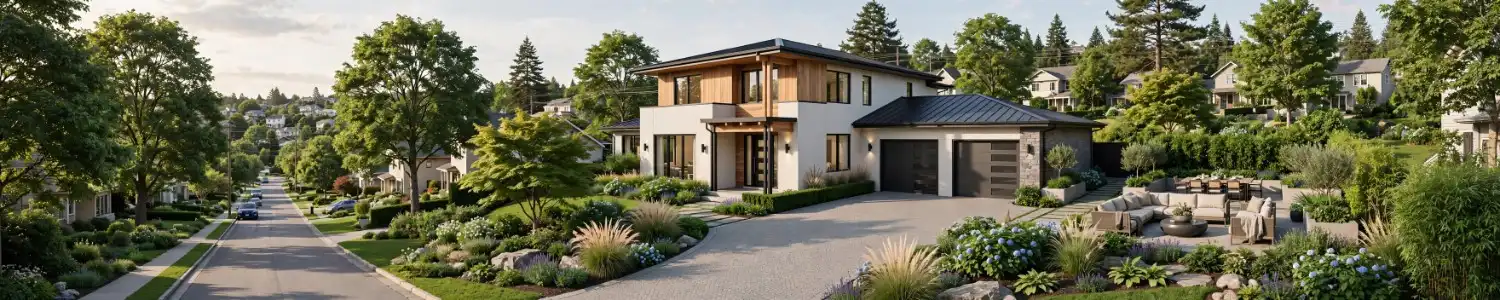
A home rendered against a white background or a generic environment communicates significantly less value – both commercially and design-wise – than one placed in a believable, site-accurate landscape context. Landscape staging is a specialist skill that separates professional exterior house rendering from technical CAD output.
What to look for in the answer:
- The ability to model and texture site elements: driveways, pathways, retaining walls, fencing, and ground cover
- A library of high-quality 3D plant and tree assets covering species relevant to the project’s location and season
- The option to include neighboring structures and streetscape context where site plan data supports it
- Lifestyle staging elements appropriate to the target demographic: vehicles, outdoor furniture, pathway lighting
Red flag: A studio that produces clean architectural renders but stages them with obviously generic, low-resolution vegetation or cartoonish plant assets that break the photorealistic illusion.
Question 7 – What Output Formats and Resolutions Do You Deliver?
Why this question matters:
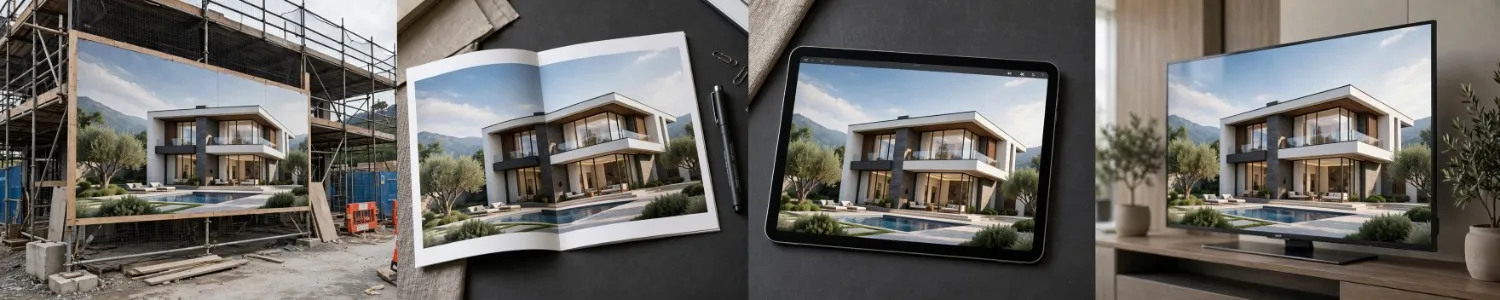
A house rendering file that looks excellent on screen may be entirely unusable for print applications – brochures, site hoardings, display suite lightboxes, and large-format signage all require print-resolution output (300 DPI minimum at intended print dimensions). Discovering this after delivery forces a return visit to the studio and delays dependent production workflows.
What to look for in the answer:
- Standard screen-resolution outputs (minimum 1,920 x 1,080 pixels; ideally 3,840 x 2,160 or higher for retina displays)
- Print-resolution outputs (300 DPI minimum at the specified print dimensions for each intended application)
- Format options: JPEG for standard digital use, TIFF or PNG for print production and post-processing workflows
- Video exports for animated walkarounds: minimum 1,080p; 4K for display suite and large-screen applications
- Willingness to deliver layered source files (PSD or native format) for in-house post-processing if required
Red flag: A studio that delivers a single JPEG file at screen resolution without offering print-ready alternatives or asking about the client’s intended output applications.
Question 8 – What Is Your Standard Turnaround Time and How Do You Manage Deadlines?

Why this question matters:
Pre-construction marketing campaigns, planning submissions, display suite launches, and real estate listing dates all operate on fixed timelines. A house rendering studio that cannot commit to a reliable delivery schedule – or that habitually misses agreed deadlines – creates commercial risk for every stakeholder in the project.
What to look for in the answer:
- A defined standard turnaround time for initial delivery (typically 3 to 7 business days for a standard residential exterior project)
- A clear timeline breakdown: source document review, 3D modeling, texturing and lighting, initial render delivery, and revision turnaround
- A transparent policy for rush or priority delivery requests, including any associated premium fee
- References or testimonials that specifically mention on-time delivery performance
Red flag: A studio that gives vague delivery windows (“a few weeks” or “as soon as possible”) without committing to a specific business-day timeline from source document receipt to initial delivery.
Question 9 – Who Actually Works on My Project and What Is Their Architectural Background?

Why this question matters:
Many house rendering studios present a polished front-end client experience while outsourcing production to offshore freelancers with limited architectural literacy. The person who builds your 3D model and applies your material specifications needs to understand architectural drawing conventions, standard construction details, and the design intent behind elevation drawings. Without that literacy, technically capable artists produce dimensionally incorrect or architecturally implausible results.
What to look for in the answer:
- Confirmation that the primary house rendering artist has a background in architecture, interior design, or architectural visualization – not just generalist 3D modeling
- A studio structure that keeps production in-house or uses a consistent, vetted production team rather than ad hoc freelancers
- Direct client-artist communication channels, or at minimum a technical project manager who can accurately translate architectural brief requirements into production instructions
- Evidence of continued professional development: conference participation, software certifications, or published work in architectural visualization platforms
Red flag: A studio that cannot clearly describe who works on client projects, deflects questions about team background, or relies entirely on offshore production without quality control oversight.
Question 10 – Can You Provide References From Past Clients in a Similar Project Category?
Why this question matters:
Portfolio images tell you what a studio can produce. Client references tell you what it is like to work with them – and whether the experience matched the expectation set during the briefing conversation. Specifically, references from clients in your same category (homeowner, architect, builder, or developer) provide the most relevant insight because the brief requirements, revision patterns, and deadline pressures differ significantly across these client types.
What to look for in the answer:
- Willingness to provide at least two or three direct client references from relevant project categories
- Testimonials that specifically address: turnaround time reliability, revision process quality, communication responsiveness, and the commercial outcome the house rendering supported
- Case studies that show the source brief alongside the delivered output – demonstrating the gap between input document quality and rendered output quality
- A track record of repeat engagements: clients who return for multiple projects are the most credible evidence of genuine studio quality
Red flag: A studio that offers only written testimonials on their own website without any verifiable external references, or that actively resists providing direct client contact details.
Red Flags Summary: When to Walk Away From a House Rendering Studio
| Red Flag | What It Signals |
|---|---|
| No residential exterior portfolio section | Generalist studio – limited residential expertise |
| Revision policy is vague or undefined | Budget and timeline risk – expect surprise charges |
| Cannot name their rendering engine | Basic or undisclosed technical pipeline |
| No dusk or twilight renders in portfolio | Limited lighting simulation capability |
| Generic or cartoonish landscape staging | Low-quality 3D plant library – breaks photorealism |
| Screen-resolution output only | No print production capability |
| Vague delivery timeline | Deadline reliability risk |
| Cannot describe who works on projects | Offshore outsourcing without quality oversight |
| No client references available | Insufficient verifiable track record |
| No source document review at brief stage | Production accuracy risk from unconfirmed assumptions |
The 10 Questions at a Glance: A Quick Reference Checklist
Use this checklist when evaluating any house rendering studio before committing to a brief:
- Can you show me specifically residential exterior house rendering projects?
- What source documents do you need and how do you handle incomplete drawings?
- How many revision rounds are included and what defines a revision?
- What rendering software and rendering engine do you use?
- How do you simulate lighting and what lighting options do you offer?
- How do you handle landscape staging and site context?
- What output formats and resolutions do you deliver?
- What is your standard turnaround time and how do you manage deadlines?
- Who works on my project and what is their architectural background?
- Can you provide client references from a similar project category?
A studio that answers all ten questions with confidence, specificity, and transparency is almost certainly capable of delivering the professional outcome your project requires.
Comparing Studio Types: What to Expect at Each Level
| Studio Type | Typical Output | Best For | Limitations |
|---|---|---|---|
| Offshore generalist CGI studio | Basic to moderate realism | Budget-constrained early concepts | Limited architectural literacy, revision risk |
| Local freelance 3D artist | Variable – depends on individual | Small custom projects | Capacity and consistency issues |
| Generalist visualization agency | Good general CGI across categories | Multi-category projects | May lack residential exterior specialism |
| Specialist architectural visualization studio | High photorealism, architectural accuracy | All professional applications | Higher investment |
| Specialist residential exterior rendering company | Premium photorealism, construction accuracy, marketing-grade output | Homeowners, architects, builders, developers | Premium investment – justified by commercial ROI |
Expert Tips for Getting the Best Result From Any House Rendering Studio You Choose
Tip 1 – Prepare Your Brief Before Your First Conversation
The more specific and organized your brief, the more accurate and efficient the studio’s response will be. Before contacting any studio, prepare: a list of the camera angles you want, the output formats you need, your deadline, your budget range, and a clear description of the project type and intended use for the renders.
Tip 2 – Request a Paid Test Render Before Committing to a Full Project
For high-value projects or long-term studio relationships, asking a shortlisted studio to produce a single test render at a reduced fee is a highly effective qualification step. It reveals the studio’s actual production quality, communication style, revision responsiveness, and timeline reliability before you commit to the full project brief.
Tip 3 – Specify All Output Formats in Writing at Brief Stage
Never assume. Every intended use of the rendering – MLS listing, print brochure, social media ad, site hoarding, display suite lightbox – should be specified in writing at the brief stage so the studio delivers all file formats and resolutions in a single production pass.
Tip 4 – Ask for a Confirmation of Brief Before Production Begins
Before the studio begins any 3D modeling, request a written confirmation summarizing the agreed deliverables: number of views, lighting conditions, landscape staging approach, revision rounds included, output formats, and delivery timeline. This document protects both parties and eliminates the most common source of project dissatisfaction: misaligned expectations.
Tip 5 – Evaluate Communication Responsiveness During the Briefing Process
A studio that is slow, unclear, or evasive during the briefing and quotation process will be equally slow, unclear, or evasive once production has started. Responsiveness and communication quality during the pre-engagement phase is the most reliable predictor of the working relationship you will experience once a project is underway.
Research compiled by the Architectural Visualization industry community at ArchViz consistently identifies brief clarity, revision structure transparency, and communication responsiveness as the three variables most strongly correlated with client satisfaction in professional house rendering engagements – far more so than raw portfolio quality alone.

Common Mistakes Clients Make When Choosing a House Rendering Studio
Selecting on Price Alone
The lowest price in the market almost never delivers the best commercial outcome. A house rendering that fails to serve its intended purpose – whether through inaccurate geometry, poor material fidelity, incorrect output resolution, or missed deadlines – costs far more in lost time, re-briefing fees, and delayed marketing campaigns than the initial price saving.
Evaluating Only Hero Portfolio Images
Studios curate their best work for their portfolio pages. Request examples of work from projects with similar source document quality to yours – including projects where the client provided incomplete or preliminary drawings. How the studio handles challenging source material is a more accurate performance indicator than how it performs on well-resourced showcase projects.
Not Confirming Intellectual Property Ownership
Always confirm in writing that full intellectual property rights to the delivered house rendering files transfer to the client upon payment. Some studios retain licensing rights to rendered images – limiting the client’s ability to use them commercially in advertising, print, or third-party submissions without additional licensing fees.
Skipping the Brief Confirmation Step
As noted in the expert tips above, beginning production without a written brief confirmation is the most common procedural mistake clients make. A brief confirmation protects against scope creep, timeline disputes, and the delivery of outputs that technically fulfill the studio’s interpretation of the brief but fail to meet the client’s actual requirements.
Frequently Asked Questions (FAQ)
How do I know how to choose a 3D exterior house rendering company that specializes in residential projects?
The most reliable method is to review the studio’s portfolio specifically for residential exterior house rendering projects – not just any CGI work. Look for a range of architectural styles, accurate material representation, realistic landscape staging, and evidence that the work was produced from architectural drawings rather than from reference photographs of existing buildings. Asking the studio directly about their residential exterior project volume and the architectural background of their production team provides additional confirmation.
What is the most important question to ask a house rendering studio before hiring?
The revision policy question is arguably the most commercially critical. Many clients experience unexpected budget overruns because they did not establish in advance how many revision rounds were included, what constitutes a revision versus a scope change, and what additional revisions cost. Clarifying this before signing any brief agreement protects your budget and eliminates the most common source of client-studio conflict.
Is a higher-priced house rendering studio always better quality?
Not necessarily – but a suspiciously low price is almost always a reliable indicator of limitations: lower-resolution output, generic landscape staging, limited revision rounds, basic rendering engine pipelines, or offshore production without quality oversight. Evaluate studios on their portfolio quality, technical capabilities, revision policies, and client references rather than on price positioning alone.
How long should a 3D exterior house rendering take to produce?
For a standard single-family residential exterior house rendering from complete architectural drawings, professional studios typically deliver initial images within 3 to 7 business days. More complex projects – multi-lot developments, animated walkarounds, or projects with incomplete source documents – require longer timelines. Any studio that promises same-day or next-day delivery for a detailed photorealistic exterior render should be evaluated carefully, as these timelines are inconsistent with professional production quality standards.
Do I retain ownership of the rendered images after delivery?
Intellectual property ownership should be explicitly confirmed before engaging any studio. Most professional house rendering studios transfer full IP rights to the client upon payment of the agreed fee – meaning you can use the renders freely in any marketing, print, or commercial application. However, this is not universal. Always request written confirmation of IP transfer terms before beginning production.
What should I do if the initial render does not match my brief?
First, refer to the written brief confirmation document (if one was produced at the start of the engagement) to determine whether the discrepancy falls within the studio’s revision scope or represents a production error. If the render does not reflect clearly specified brief requirements, this should be addressed as a production correction rather than a revision round. This distinction – between correcting a brief-aligned mistake and changing a design element – is precisely why a written brief confirmation at project start is essential.
Can I use rendered images in MLS property listings and real estate portals before construction is complete?
Yes. Most MLS platforms and major property portals accept photorealistic house rendering imagery for pre-construction listings. The listing description should clearly disclose that images represent an architectural house rendering of the proposed completed property. This transparency maintains buyer trust while enabling the full commercial benefit of professional visual marketing from day one of the campaign.
Choose With Confidence, Not Just With a Google Search
Learning how to choose a 3D exterior house rendering company is not simply a matter of finding the best-looking portfolio. It requires evaluating technical capability, architectural literacy, revision structure, output format range, timeline reliability, and the professional transparency that distinguishes a trustworthy long-term studio partner from a one-time vendor relationship.
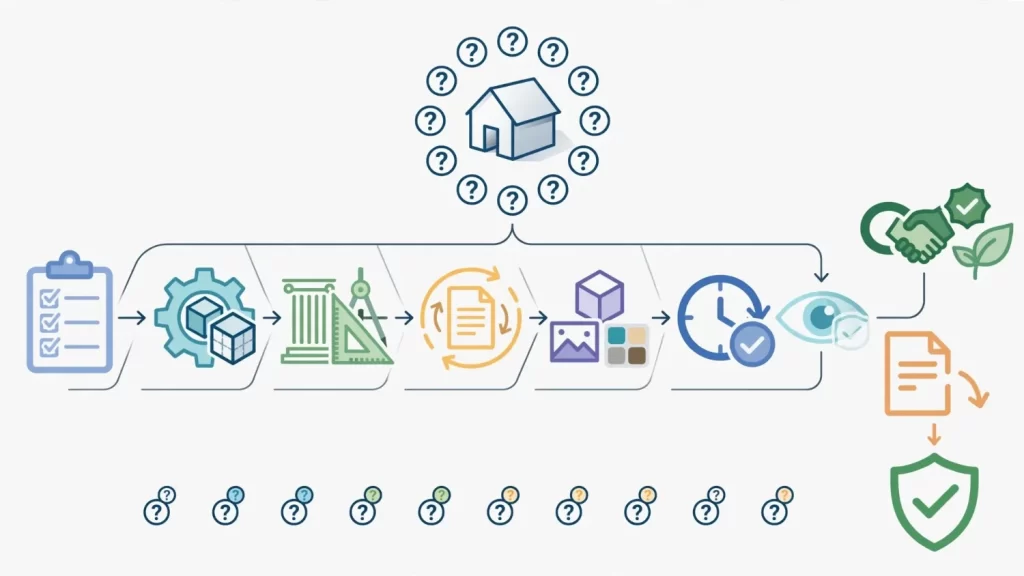
The 10 questions in this article give you everything you need to conduct a rigorous, structured evaluation of any house rendering studio before committing to a brief. A studio that answers all ten with confidence, specificity, and transparency – without deflection or vague reassurances – is almost certainly the right choice for your project.
If you want to work with a specialist residential exterior house rendering practice that treats every one of these questions as a standard part of doing business – not as a challenge to navigate – that brings architectural accuracy, photorealistic output quality, and transparent project management to every client engagement.